Blog cold plunge
Cold Plunge Temperature: How Cold Should the Water Be?
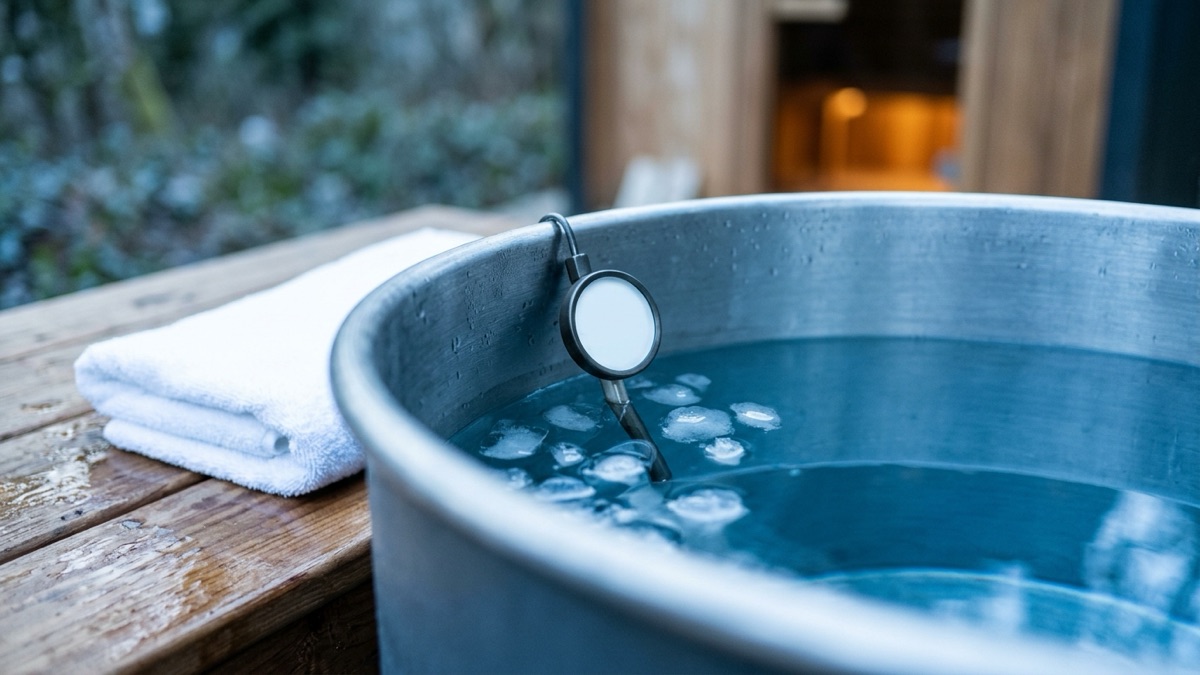
You have a tub, a thermometer and a number to pick. Every video gives a different one, and the colder ones get the most views. Here is the honest version: the temperature with the most evidence behind it is not the coldest one, and the right number for you depends on how long you have been doing this.
Quick answer
For most people a cold plunge works best between 50 and 59 F (10 to 15 C). Cleveland Clinic suggests that range for beginners and advises never going below 40 F. Colder water does not add benefit, it adds risk: cold shock peaks between 50 and 60 F, so shorten the session before you lower the temperature.
Key takeaways
- The range with the most research behind it is 10 to 15 C (50 to 59 F). Most athlete recovery studies used it, and Cleveland Clinic recommends it for beginners.
- Below 50 F, the National Center for Cold Water Safety lists total loss of breathing control and maximum intensity cold shock for people who are not used to it.
- Cleveland Clinic advises not going below 40 F. Below 45 F, water is described as painfully cold, with clear thinking almost impossible.
- Water in the 60s is still a cold plunge, just a milder one. Hypothermia can begin within minutes below 65 F, so milder water still needs a timer.
- Measure the water with a thermometer right before you get in. Chiller displays and ice counts are guesses.
What temperature counts as a cold plunge?
Colder than you think is fine, and warmer than you think still works. The National Weather Service notes that water as warm as 77 F (25 C) can trigger an involuntary gasp, and CDC NIOSH states that hypothermia can occur in any water below 70 F. So the cold response begins well above the numbers people argue about online.
The research the whole hobby leans on sits in a narrower band. The cold water immersion studies pooled in the 2022 Sports Medicine meta-analysis by Moore and colleagues mostly used 10 to 15 C (50 to 59 F) for 10 to 15 minutes in trained athletes, with a few at 5 to 9 C or 20 C. Cleveland Clinic's sports medicine physician Dominic King recommends the same 50 to 59 F for beginners, with a hard floor of 40 F (4 C).
| Water temperature | What it is | What the sources say |
|---|---|---|
| Below 40 F (4 C) | Experienced only | Cleveland Clinic advises not going below 40 F. Below 45 F the Cold Water Safety guide describes burning pain and almost no clear thinking. |
| 40 to 49 F (4 to 9 C) | Short sessions | Below 50 F: total loss of breathing control and maximum cold shock for people not used to it (Cold Water Safety guide). |
| 50 to 59 F (10 to 15 C) | The beginner range | Cleveland Clinic's recommendation, and the range most recovery studies used. |
| 60 to 69 F (15 to 21 C) | Cool, longer sessions | Harvard Health: hypothermia can begin within minutes below 65 F. Still a plunge, a milder one. |
| 70 F and up (21 C and up) | Cool water | Hypothermia is possible below 70 F (NIOSH). Above it you are cooling off, not plunging. |
Those five bands are the ones the free cold plunge time calculator uses, with the same sources attached.
Why is 50 to 59 F the range with the most evidence?
Because that is where the studies were done. When researchers wanted to know whether cold water helps athletes recover, they filled a tub to somewhere between 10 and 15 C, kept people in it for 10 to 15 minutes, and measured soreness, power and blood markers the next day. The Moore meta-analysis of 52 such studies found that cold water immersion reduced soreness and improved perceived recovery after high-intensity exercise, and that shorter times and lower temperatures within that range were linked to the larger effects on some outcomes.
Harvard Health describes most ice baths as sitting "between 50 and 60 F", the same band in plainer words. Three independent sources on the same ten degrees is a good place to start.
Fun fact
The much-quoted 11 minutes of cold a week comes from a 2021 study of 8 young Danish winter swimmers whose sea water ran between 9 C and 1 C in season, and who stayed in for about 1.4 minutes per dip. They were experienced, they alternated dips with sauna, and the authors warn that the small sample limits what anyone can conclude.
Is colder better?
No. Colder is harder, and harder is not the goal. The National Center for Cold Water Safety states that most people who are not used to cold water experience their maximum cold shock response somewhere between 50 and 60 F. Below that, the shock does not get stronger, because it is already at its maximum. What changes is the pain and the speed at which your hands and feet stop working.
Below 45 F, the same guide describes water that "often feels like it's burning your skin", and notes that clear thinking becomes almost impossible. That matters more than it sounds: deciding to get out is a thought, and a tub you cannot think clearly in is a tub you may stay in too long. Cleveland Clinic draws its line at 40 F for everyone.
The response does soften with practice. The 2022 narrative review by Espeland and colleagues reports that thermal sensation and comfort habituate after a few short whole-body immersions, a change that lasts some weeks after you stop. So a 45 F tub that is brutal in week one can feel manageable in month three. That is a reason to earn colder water slowly, not to start there.
How does temperature change how long you stay in?
Every ten degrees colder roughly halves the sensible session. At 50 to 59 F, Cleveland Clinic suggests a minute or two for beginners and never more than five minutes. In the 40s, the same five-minute ceiling becomes too long for most people, and below 40 F a session is measured in seconds for all but the experienced. In the 60s the water cools you more slowly, so sessions can stretch, but Harvard Health's warning that hypothermia can set in within minutes below 65 F is the reason to keep a timer running there too.
| Water | First week | Regular (a few weeks in) | Experienced (months) |
|---|---|---|---|
| Below 40 F | Not yet | Up to about 1 minute | Up to about 2 minutes |
| 40 to 49 F | About 1 minute | 1 to 2 minutes | Up to 3 minutes |
| 50 to 59 F | 1 to 2 minutes | 2 to 3 minutes | Up to 5 minutes |
| 60 to 69 F | 2 to 3 minutes | 4 to 6 minutes | Up to 10 minutes |
Those are planning numbers, built from the Cleveland Clinic ceiling and the bands above, not study results. The guide to how long to cold plunge walks through the reasoning band by band.
Try it
The free cold plunge time calculator turns your water temperature, experience and goal into a session length and a weekly target, and shows the math and the sources under the result.
What temperature should an ice bath be, and how do you measure it?
An ice bath is a cold plunge you made with ice, so the same bands apply. The difference is control. A tub of tap water and bagged ice starts colder than you planned and warms as you sit in it, while a chilled tub holds a set point. Manufacturer chillers advertise floors well below the useful range: the maker of the Plunge tub states on its product page that the tub "cools to as low as 37 F" with its Pro Chiller. The fact that a machine can reach 37 F is not a reason to use it.
Measure in the water, right before you get in. A chiller display reads at the chiller, and a tub of ice reads differently at the top and the bottom until you stir it. A cheap pool thermometer on a string does the job. For the ice-and-tap-water route, the ice bath temperature guide covers how much the temperature drifts through a session.
Does the ideal temperature change with your goal?
A little, and less than the marketing suggests. For recovery after hard training, 10 to 15 C is the studied range, and the Moore meta-analysis found the benefits mostly after high-intensity sessions rather than after eccentric strength work. For mood and alertness, the response arrives in the first minutes at any temperature in the cold range, so a slightly warmer tub you can breathe calmly in beats a colder one you fight. For cold adaptation, repeated short exposures over weeks matter more than any single temperature.
One thing that does not depend on temperature is timing around lifting. In a 12-week trial, Roberts and colleagues found that 10 minutes of 10 C water after each strength session blunted strength and muscle gains compared with easy cycling. The lesson is about when, not how cold: plunge before you lift, or wait several hours. The cold plunge after a workout guide covers the timing in detail.
Heads up
Cold water is a real stressor at every temperature in this article. The first minute brings gasping, fast breathing and a jump in heart rate and blood pressure, and the National Center for Cold Water Safety notes that you can drown in the cold shock stage before hypothermia is ever a factor. Never plunge alone, never after alcohol, and never hold your breath or hyperventilate in or before the water. Get out when you feel lightheaded, numb or confused. If you have a heart condition, high blood pressure or take medication for it, are pregnant, or have Raynaud's, peripheral neuropathy or poor circulation, talk to your doctor before you start.
Who should pick a warmer temperature, or skip it?
Anyone in their first week should start at the warm end of the beginner range, around 57 to 59 F, and shorten the session rather than chase the number. Anyone who has trouble rewarming, who is older, or who is small and lean cools faster and should treat the 60s as a perfectly good plunge.
Cleveland Clinic's list of people who should talk to a healthcare provider first includes heart disease, high blood pressure, diabetes, pregnancy, peripheral neuropathy, poor circulation, venous stasis and cold agglutinin disease. If any of those is you, the right temperature is a conversation, not a search result. The cold plunge safety guide goes through each risk.
The PlungeLog app, coming to Android first, will log the water temperature next to every session so you can see what you actually tolerate rather than what you remember.
The takeaway
Fill the tub to somewhere between 50 and 59 F, measure it, and start with a minute or two. Earn colder water over weeks if you want it, and know that the evidence does not reward you for going below the 50s. Keep a timer running in milder water too. The number on the thermometer matters far less than the two rules that never change: never alone, and out the moment something feels wrong.
PlungeLog guides are general information built on the published research and safety guidance listed below. They are not medical advice and do not diagnose or treat anything. Cold water and heat stress the heart and can cause cold shock, hypothermia, fainting and dehydration. Never plunge alone or after alcohol, and talk to your doctor before you start if you have a heart condition, high blood pressure, are pregnant, or have Raynaud's or poor circulation.
Questions people ask
Is 50 F too cold for a beginner?
No. Cleveland Clinic puts the beginner range at 50 to 59 F (10 to 15 C). What makes 50 F hard is the cold shock in the first minute, so start with a minute or two, breathe out slowly, and get out when the timer rings.
What is the best cold plunge temperature for recovery?
Most recovery studies in athletes used 10 to 15 C (50 to 59 F). A 2022 meta-analysis in Sports Medicine found cold water immersion reduced soreness and improved perceived recovery after high-intensity exercise, mostly in that range.
Is a 40 F cold plunge safe?
Cleveland Clinic advises not going below 40 F, and the National Center for Cold Water Safety describes water below 45 F as painfully cold with clear thinking almost impossible. It is territory for experienced plungers with a spotter and a short fixed time, not for a first month.
Does the water need ice to count as a cold plunge?
No. Temperature is what matters, not how you got there. In winter, tap water in many places is already in the 50s, and a chilled tub holds a set temperature without any ice.
How do I measure my cold plunge temperature?
Put a thermometer in the water you will sit in. A chiller display reads at the chiller, and a tub of ice and tap water changes by the minute, so check it right before you get in.
Where these facts come from
- Cleveland Clinic: Are 'cold plunge' ice baths good for you?: health.clevelandclinic.org/what-to-know-about-cold-plunges
- National Center for Cold Water Safety: water temperature safety guide: www.coldwatersafety.org/water-temperature-safety-guide
- National Weather Service: cold water hazards and safety: www.weather.gov/safety/coldwater
- CDC NIOSH: cold-related illnesses in workers: www.cdc.gov/niosh/cold-stress/about/related-illness.html
- Moore et al. 2022, Sports Medicine: cold-water immersion after strenuous exercise, meta-analysis: pmc.ncbi.nlm.nih.gov/articles/PMC9213381/
- Harvard Health: Can ice baths improve your health?: www.health.harvard.edu/healthy-aging-and-longevity/can-ice-baths-improve-your-he
- Soberg et al. 2021, Cell Reports Medicine: winter-swimming men: pmc.ncbi.nlm.nih.gov/articles/PMC8561167/
- Plunge: original cold plunge tub product page: plunge.com/products/plunge
Read next
contrast therapy
Sauna and Cold Plunge: The Right Order and a Weekly Routine