Blog sauna
How Long to Stay in a Sauna: Times by Type and Goal
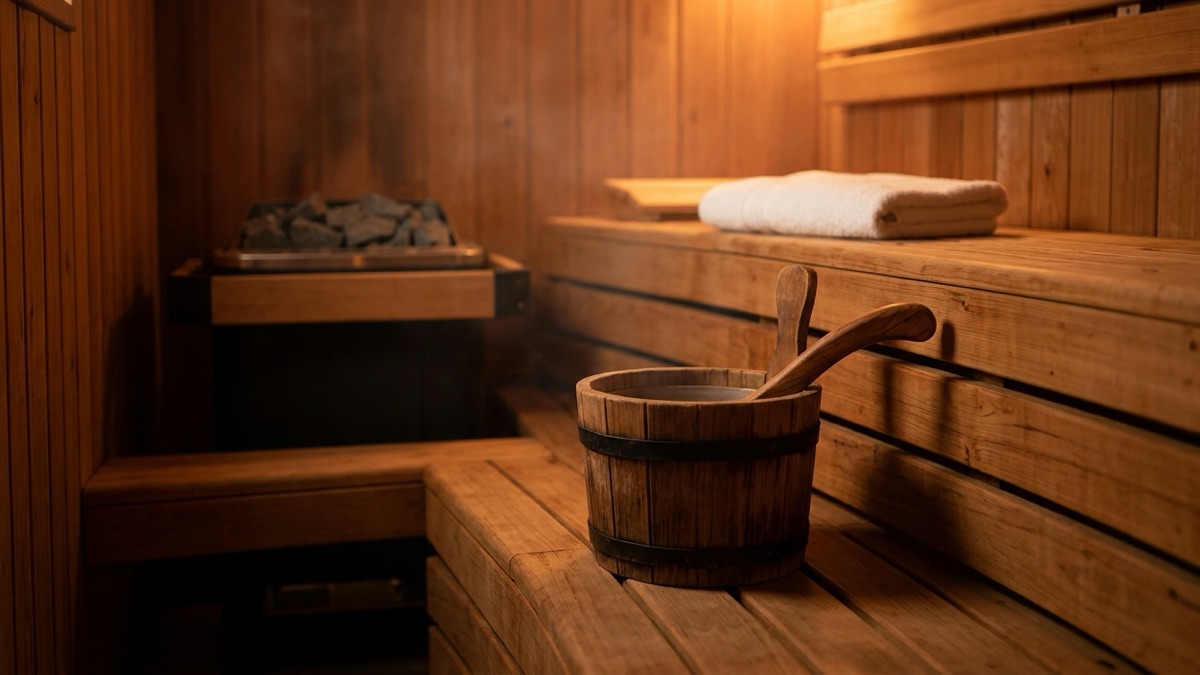
You are on the top bench, the heat has settled on your shoulders, and you are wondering whether the person who got out after eight minutes was doing it wrong or you are. Sauna time is simpler than cold plunge time, because the risk builds more slowly, but it still has numbers worth knowing.
Quick answer
In a traditional sauna at 80 to 100 C (176 to 212 F), sessions in the research ran 5 to 20 minutes, usually in two or three rounds with cooling between. Infrared cabins run cooler, about 45 to 60 C, and the studies used 15 to 30 minutes. Leave when you feel dizzy, drink water, and skip it after alcohol.
Key takeaways
- Traditional Finnish sauna sessions in the 2018 Hussain and Cohen systematic review ran 5 to 20 minutes at 80 to 100 C with low humidity.
- Infrared sauna studies mostly used 60 C for 15 to 30 minutes, so an infrared session is longer because the air is cooler.
- Two or three rounds with cooling and water between is the normal pattern; the Soberg winter swimmers averaged two visits and about 57 minutes of sauna a week.
- The Finnish cohort found longer and more frequent sessions associated with lower cardiovascular death in men, but it is observational and never a reason to push through dizziness.
- Alcohol is involved in about half of sauna deaths in Finnish data. Water before, between and after; no drinks.
How long is a normal sauna session?
The best summary of what sauna research actually did comes from a 2018 systematic review by Hussain and Cohen, which looked at 40 clinical studies with 3,855 participants. Traditional Finnish sauna bathing, it says, happens "at temperatures of 80 C to 100 C with dry air", with relative humidity of 10 to 20 percent and short exposures of 5 to 20 minutes. Across the included studies, individual sessions ranged from 5 to 20 minutes.
That is the honest range: five minutes is a real sauna session, and twenty is a long one. Where you sit in it depends on the temperature, the humidity, your experience and how you feel on the day. A first-timer at 100 C near the ceiling is at the hot end of everything and should expect the short end of the range.
| Sauna type | Air temperature | Session length in the studies | Notes |
|---|---|---|---|
| Traditional (electric or wood) | 80 to 100 C (176 to 212 F) | 5 to 20 minutes | Low humidity, 10 to 20 percent; water on the stones raises it briefly |
| Infrared cabin | 45 to 60 C (113 to 140 F) | 15 to 30 minutes | Most infrared studies used 60 C; heat comes from the emitters, not the air |
| Steam room | Cooler than a sauna, saturated humidity | Shorter than a dry sauna for most people | Sweat cannot evaporate, so it feels hotter than the thermometer says |
The sauna temperature guide goes into each type in detail. The one rule that crosses all three: the clock is a guide, and the way you feel is the limit.
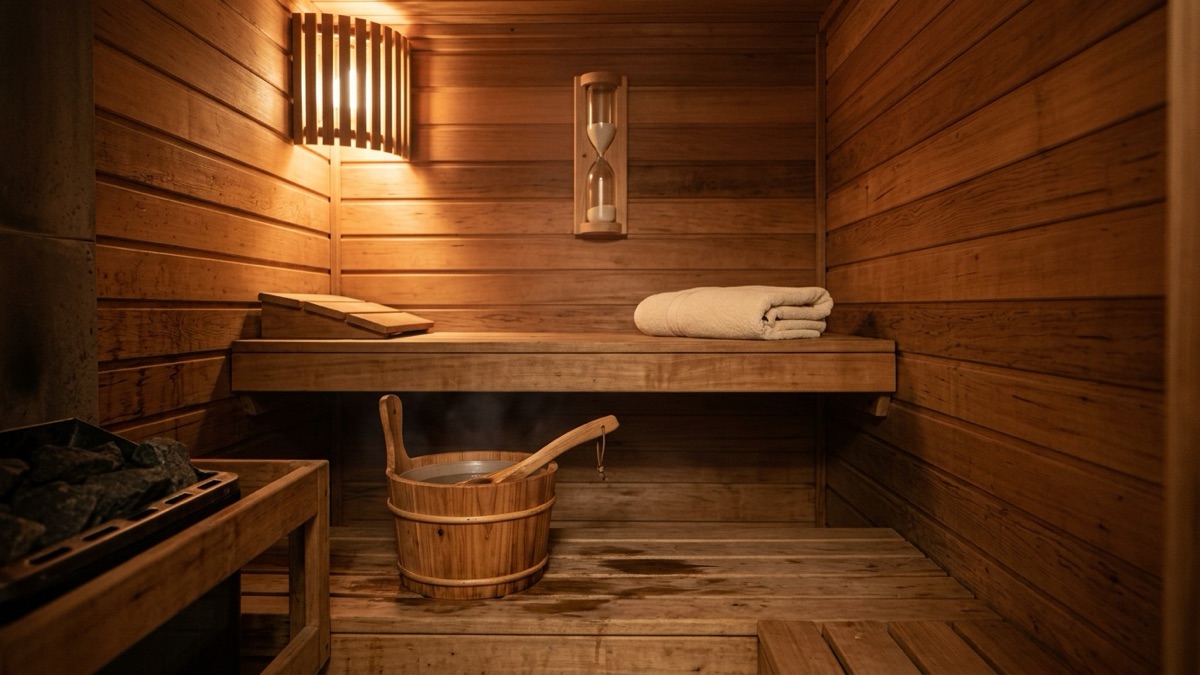
How long should an infrared sauna session be?
Longer, because the air is cooler. Hussain and Cohen note that infrared saunas run "at lower temperatures (45-60 C) than Finnish saunas", and that "all infrared sauna studies entailed sauna exposures at 60 C for 15-30 minutes", with two exceptions at 40 to 55 C for chronic fatigue and arthritis groups. At 60 C you are not going to be driven out by the air the way a 100 C sauna drives you out, so the session stretches, and so does the sweating.
That is the catch with infrared time. A 30-minute session at 60 C can leave you more dehydrated than a 10-minute session at 90 C, because you were in there three times as long without the discomfort that usually ends a session. Drink before, and keep water in the cabin. The infrared sauna how long guide looks at the infrared studies one by one.
How many rounds, and how long between them?
The Finnish pattern is rounds, not one long sit: heat, cool off, drink water, go back in. Two or three rounds is where most people stop, with each round shorter than a single long session would be. The Finnish Sauna Society notes that as much as 70 percent of your blood may be circulating through the skin while you are in the sauna, compared with about 10 percent at room temperature, which is why standing up quickly after a long round can make you lightheaded. The cool-down between rounds is where that settles.
A useful real-world reference comes from the 2021 Soberg study of 8 young Danish winter swimmers, whose participant table lists an average of two sauna visits per session, about 11 minutes per visit, and 57 minutes of sauna per week. Those are experienced people alternating sauna with sea dips, and their sauna time per round sits in the middle of the research range. The sauna rounds guide covers how to structure two or three rounds with cooling.
Tip
Cool down before you drink anything cold, and drink water, not beer. The Finnish Sauna Society reports that drunkenness is linked to sauna deaths in as many as half of cases in some studies, through slips, arrhythmia and falling asleep in the heat.
Is 20 minutes in a sauna too long?
For a regular bather who is drinking water and feels fine, 20 minutes is the top of the studied range, not past it. For a first session, or at a very hot setting, it is long. The question gets interesting because of one Finnish study that people quote constantly.
In 2015, Laukkanen and colleagues published a cohort study in JAMA Internal Medicine that followed 2,315 Finnish men aged 42 to 60 for a median of 20.7 years. Men who used the sauna 4 to 7 times a week had a hazard ratio for sudden cardiac death of 0.37 compared with men who went once a week, and men whose sessions ran more than 19 minutes had a hazard ratio of 0.48 compared with men whose sessions were under 11 minutes. The authors concluded that "increased frequency of sauna bathing is associated with a reduced risk" of sudden cardiac death, fatal coronary disease, fatal cardiovascular disease and all-cause mortality.
Here is what that does and does not mean. It is an association in one group of middle-aged Finnish men who chose their own sauna habits; it is not a trial, and published letters at the time argued the link may not be causal. It tells you that long, frequent sauna use was not harmful in that population and was associated with better outcomes. It does not tell you that your twentieth minute is doing something your tenth minute was not. The sauna and heart health guide walks through the cohort and its limits.

What changes the right session length for you?
Temperature first. A 100 C sauna with water on the stones is a different place from an 80 C sauna with dry air, and the Finnish Sauna Society's own cited study compared exactly those two settings. Humidity second: a ladle of water on the stones raises the felt heat sharply for a minute or two. Then the bench: the top bench can be 20 or 30 degrees hotter than the bottom one. And then you: how hydrated you are, whether you trained today, how you slept, and whether you are used to it.
| Situation | Sensible session | Why |
|---|---|---|
| First session | One round, 5 to 10 minutes, lower bench | You do not know your tolerance yet |
| Regular bather, traditional | 2 to 3 rounds of 10 to 15 minutes | The middle of the research range, with cooling between |
| Infrared cabin | 15 to 30 minutes, one round | Cooler air; the studies used 60 C for 15 to 30 minutes |
| After hard training | Shorter round, more water | You are already down fluid; see the sauna after a workout guide |
| Feeling dizzy or your heart is racing | Out now, sit down, water | The signal matters more than the clock |
Try it
The free contrast therapy builder lets you set sauna minutes per round, cold minutes, rounds and order, and totals your week against the 57 minutes heat and 11 minutes cold reference from the Soberg study group.
Who should keep it short, or ask first?
The Finnish Sauna Society's health page is reassuring and specific at the same time. A heart patient who can walk without getting out of breath can likely bathe safely, it says, but it warns that going from the sauna into cold water makes blood pressure "quickly rise relatively high", which may be dangerous for people with heart failure, weakened heart function or serious arrhythmia. Beta blockers slow the heart and lower blood pressure, especially after the sauna, and can cause dizziness. Hussain and Cohen add that the wider literature lists burns, fainting and falls, and heart strain in people with unstable coronary disease.
Heads up
Saunas dehydrate, and the most common way they hurt people is a fall after standing up lightheaded. Drink water before, between and after rounds, never drink alcohol before or during, leave the moment you feel dizzy or your heart races, and cool down for a minute or two before any cold plunge. If you have a heart condition, high or low blood pressure, take beta blockers or nitrate medication, are pregnant, or have had fainting episodes, talk to your doctor before you start. The Finnish Sauna Society notes that the general consensus in Finland is that sauna during pregnancy is safe, and it is still a question for your own doctor.
The PlungeLog app, coming to Android first, will time each round, log the air temperature, and show your sauna minutes for the week next to your cold minutes.
The takeaway
Five to twenty minutes per round in a traditional sauna, fifteen to thirty in an infrared cabin, two or three rounds with cooling and water between, and out the moment you feel dizzy. The Finnish cohort suggests that regular, longer sessions were not harmful for the men who chose them, and nothing more than that. The sauna and cold plunge routine guide shows how those rounds fit around a cold plunge, and the sauna guide covers everything else.
PlungeLog guides are general information built on the published research and safety guidance listed below. They are not medical advice and do not diagnose or treat anything. Cold water and heat stress the heart and can cause cold shock, hypothermia, fainting and dehydration. Never plunge alone or after alcohol, and talk to your doctor before you start if you have a heart condition, high blood pressure, are pregnant, or have Raynaud's or poor circulation.
Questions people ask
How long should you sit in a sauna as a beginner?
Start with one round of 5 to 10 minutes in a traditional sauna and leave the moment you feel dizzy or your heart is racing. The research sessions ran 5 to 20 minutes at 80 to 100 C, and the longer end is for people who are used to it.
Is 20 minutes in a sauna too long?
Twenty minutes is the top of the 5 to 20 minute range the traditional sauna studies used. It is fine for a regular bather who drinks water and feels well. For a first session, or at the hottest settings, it is long.
How long should an infrared sauna session be?
The infrared studies reviewed by Hussain and Cohen mostly used 60 C for 15 to 30 minutes. Infrared cabins run cooler than traditional saunas, so sessions run longer, and hydration matters just as much.
How many sauna rounds should you do?
Two or three rounds with a cool-down and water between them is the usual pattern. The winter swimmers in the Soberg study averaged two sauna visits per session and about 11 minutes per visit.
Does sitting in the sauna longer give more benefit?
The Finnish cohort found that men whose sessions ran over 19 minutes had a lower rate of sudden cardiac death than men under 11 minutes, but that is an association in one group of men, not proof that longer is better for you. Leave when you feel done.
Where these facts come from
- Hussain and Cohen 2018: clinical effects of regular dry sauna bathing, a systematic review: pmc.ncbi.nlm.nih.gov/articles/PMC5941775/
- Laukkanen et al. 2015, JAMA Internal Medicine: sauna bathing and fatal cardiovascular and all-cause mortality: pubmed.ncbi.nlm.nih.gov/25705824/
- Finnish Sauna Society: sauna and health effects: sauna.fi/en/sauna-knowledge/sauna-and-health-effects/
- Soberg et al. 2021, Cell Reports Medicine: winter-swimming men: pmc.ncbi.nlm.nih.gov/articles/PMC8561167/
- Laukkanen, Laukkanen and Kunutsor 2018, Mayo Clinic Proceedings: cardiovascular and other health benefits of sauna bathing: pubmed.ncbi.nlm.nih.gov/30077204/
Read next
contrast therapy
Sauna and Cold Plunge: The Right Order and a Weekly Routine