Blog contrast therapy
Sauna and Cold Plunge: The Right Order and a Weekly Routine
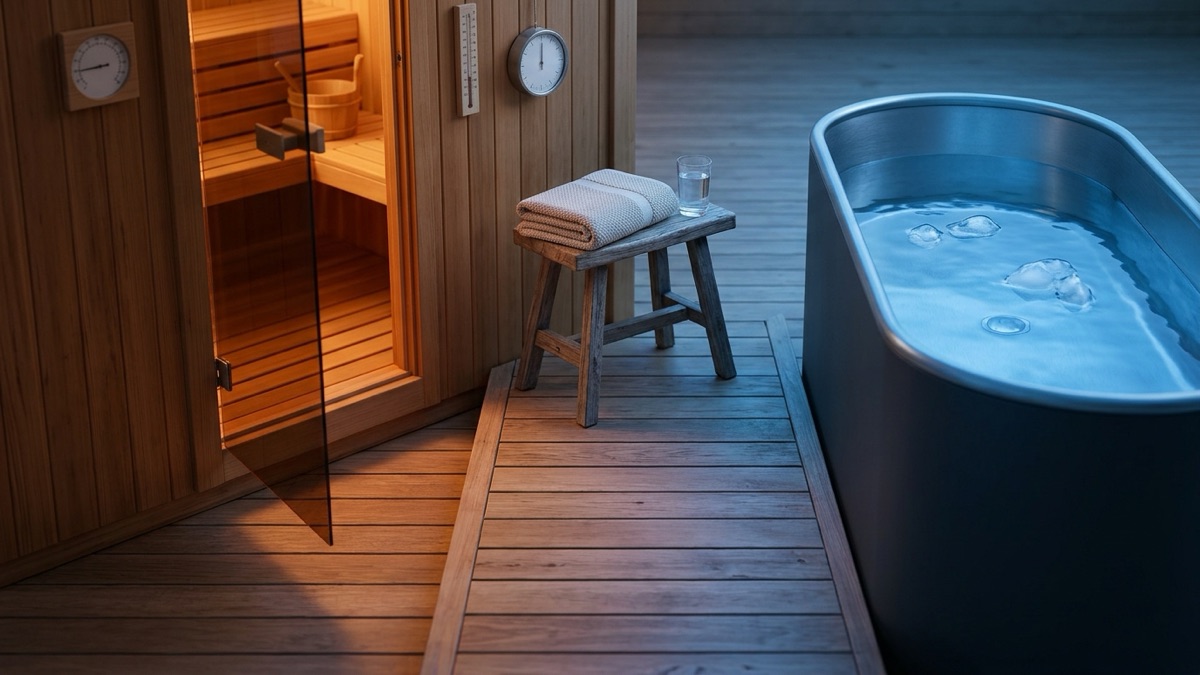
You have both now, or your gym does: a sauna and a cold tub a few steps apart. The obvious question is which one first, and the better question is what a week of both should look like. Here is the order answer, the reasoning behind it, and a routine you can print.
Quick answer
Warm up first and end on cold, with a minute or two of cooling and a glass of water between: that is the order most routines use and the one the Soberg study swimmers followed. A sensible week is two to four sessions of two or three rounds, adding up to about 57 minutes of sauna and 11 minutes of cold.
Key takeaways
- Sauna first, cold last, is the common order. End on heat instead if you struggle to rewarm or you are doing it in the evening.
- Cool down between the two. The Finnish Sauna Society warns that cold water straight after a sauna makes blood pressure rise quickly, which is dangerous for people with heart failure or serious arrhythmia.
- The weekly reference of 57 minutes heat and 11 minutes cold describes 8 young winter swimmers in one 2021 study, across 2 to 3 visits a week. A shape for your week, not a prescription.
- Two or three rounds of 10 to 15 minutes sauna and 1 to 3 minutes cold is a complete session; one round is fine on a busy day.
- Hydrate like you mean it: you sweat in the sauna, and cold water hides thirst.
Sauna first or cold plunge first?
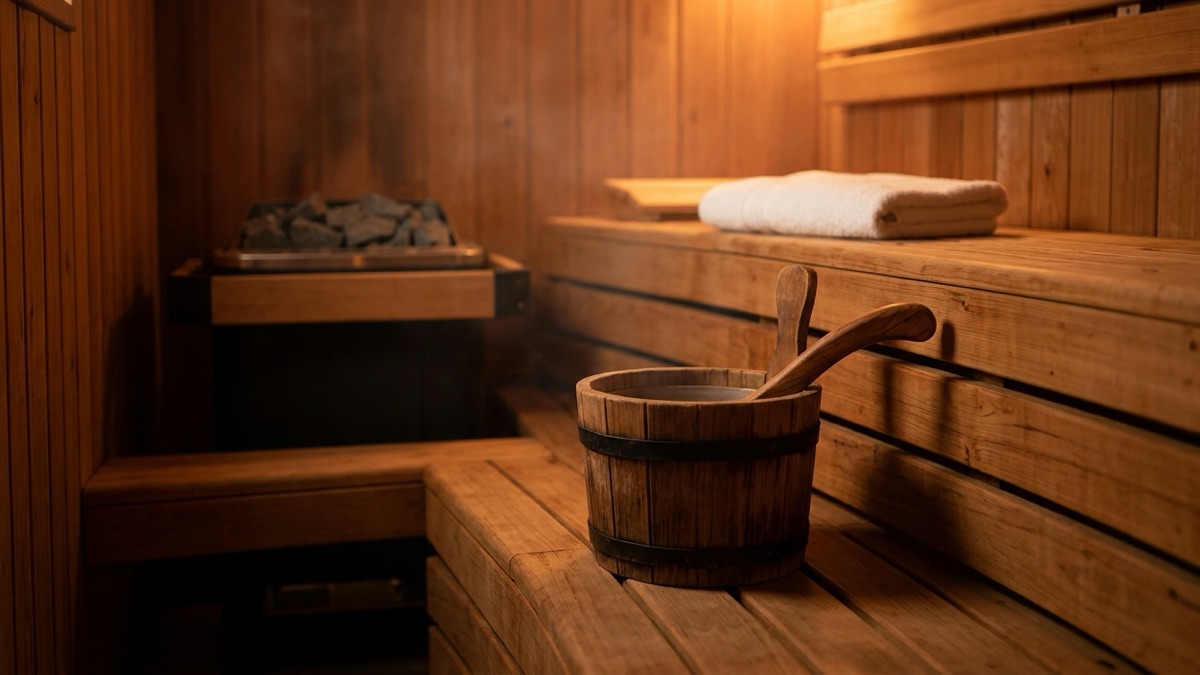
For most people, sauna first. Three reasons. The sauna warms muscles and skin, so the cold is a bigger contrast and the first minute of cold shock lands on a body that is already relaxed. Finishing on cold means you rewarm on your own afterwards, which is the part the popular protocols care about. And it matches what experienced people actually do: the 2021 Soberg study describes its winter swimmers' routine as sea dips "alternated with hot sauna sessions", with the cold as the point of the exercise.
Cold first, sauna last, has its own case. If you are small, lean or older and rewarming after a plunge takes you an hour of shivering, ending in the heat solves that. In the evening, ending warm sends you to bed relaxed rather than alert. And if your sauna is a long walk from the tub, going in cold and finishing in the heat keeps you from standing wet in the cold air at the end. The cold plunge before or after sauna guide goes deeper on both orders.
| Order | Suits | Watch for |
|---|---|---|
| Sauna, then cold (end on cold) | Mornings, recovery days, people who rewarm easily, anyone following the "end with cold" protocols | The blood pressure spike on entering cold water; cool down for a minute or two first |
| Cold, then sauna (end on heat) | Evenings, people who struggle to rewarm, cold water that is very cold | Dehydration at the end; drink before the sauna round, not just after |
| Alternating 2 to 3 rounds | Gym contrast setups, experienced users | Each switch swings heart rate and blood pressure; three rounds is plenty |
What happens to your body at the switch?
The sauna sends blood to the skin. The Finnish Sauna Society notes that as much as 70 percent of your blood may be circulating through the skin while you are in the heat, compared with about 10 percent at room temperature, and your heart beats faster to compensate. Step into cold water and the opposite happens at once: the skin vessels clamp down, the cold shock response fires, and blood pressure jumps. The Society's health page states plainly that swimming in cold water after the sauna makes "the blood pressure quickly rise relatively high", and that this may be dangerous for people with heart failure, weakened heart function or serious arrhythmia.
That is why the minute between matters. Stand or walk in cool air, let your heart rate settle, drink some water, and then get in. You lose nothing by waiting, and you take the sharpest edge off the switch. The contrast therapy guide covers the physiology of the whole cycle.
Heads up
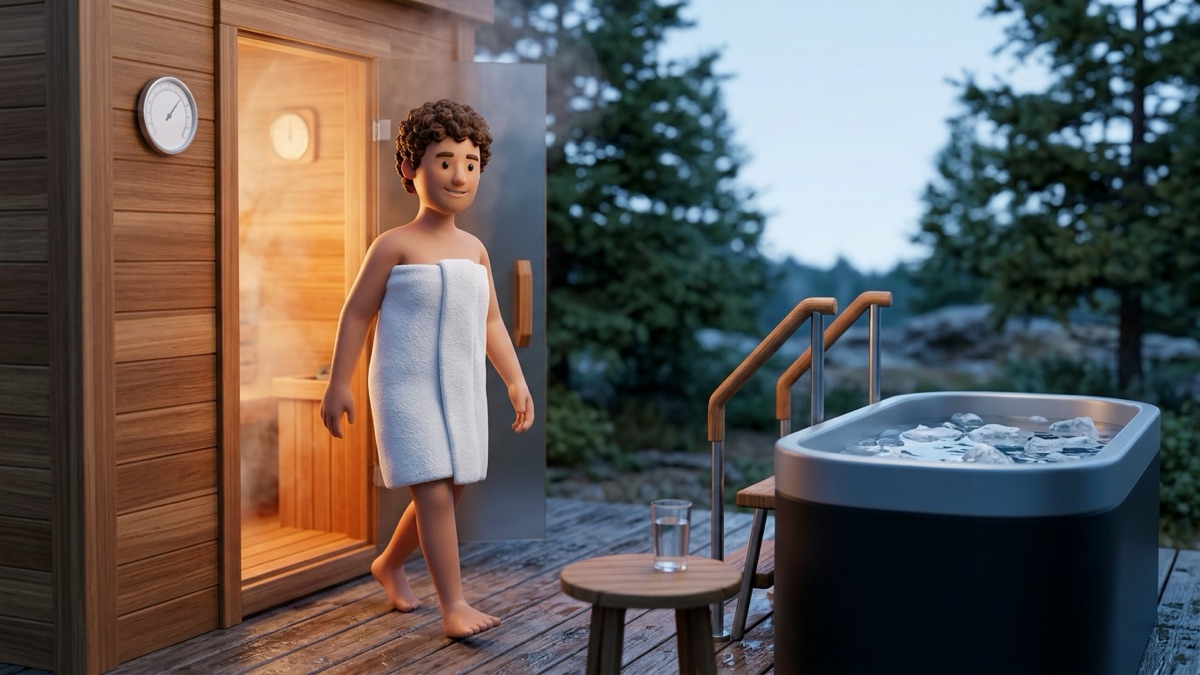
The sauna-to-cold switch spikes blood pressure, and cold water brings gasping, fast breathing and a jump in heart rate in the first minute. Never plunge alone, never after alcohol, never hold your breath or hyperventilate in the water, and get out when you feel lightheaded, numb or confused. Saunas dehydrate: drink water before, between and after rounds, and leave the heat when you feel dizzy. If you have a heart condition or arrhythmia, high or low blood pressure or take medication for it, are pregnant, or have Raynaud's or poor circulation, talk to your doctor before you start a contrast routine.
Where do the 57 and 11 minute targets come from?
From one table in one study, and it is worth knowing exactly which. Soberg and colleagues studied 8 young, healthy Danish men who had practiced winter swimming at least 2 to 3 times a week, and compared them with 8 controls. The participant table reports the swimmers' average weekly exposure as 11 minutes immersed in cold water and 57 minutes in sauna heat, from about 2.6 dips of 1.4 minutes and two sauna visits of about 11 minutes per session.
The study was about brown fat and how the body regulates temperature, not about designing a routine. Its authors warn that the small sample "provides a risk for type 1 and type 2 errors" and that they cannot say whether winter swimming itself caused the differences they saw. A popular newsletter from the Huberman Lab later turned the cold figure into a recommendation of "11 minutes per week TOTAL" across "2-4 sessions lasting 1-5 mins each", and the phrase "end with cold" grew up around the same study. We treat those as popular protocols: useful shapes for a week, built on a reference from 8 men, never medical advice.
A weekly sauna and cold plunge routine
Here is a week that lands on the reference numbers without a single long session. Each round is sauna then cold, with a minute or two of cooling and water between. Adjust the cold minutes to your water temperature using the cold plunge temperature bands: these assume 50 to 59 F.
| Day | Session | Sauna minutes | Cold minutes | Notes |
|---|---|---|---|---|
| Monday | 2 rounds: sauna 12, cold 2, sauna 12, cold 2 | 24 | 4 | Morning if you can; rewarm by moving, not with a hot shower |
| Tuesday | Rest | 0 | 0 | Water, sleep, a walk |
| Wednesday | 1 round: sauna 15, cold 2 | 15 | 2 | A short session still counts |
| Thursday | Rest | 0 | 0 | A rest day does not break the streak |
| Friday | 2 rounds: sauna 10, cold 2.5, sauna 10, cold 2.5 | 20 | 5 | End on cold, then dress in layers and walk |
| Weekend | Optional sauna-only round | 0 to 15 | 0 | Heat without cold if you want it; keep the cold at or near 11 |
| Week total | 3 sessions, 5 rounds | 59 | 11 | Reference: 57 and 11, Soberg 2021 participant table |
A few rules make this week work. Keep every cold round inside the five-minute ceiling Cleveland Clinic sets for a plunge, and shorter in colder water. Keep sauna rounds inside the 5 to 20 minute range the traditional sauna studies used, per the 2018 Hussain and Cohen systematic review. And if you lift, do not run the cold rounds within a few hours after strength training: Roberts and colleagues found 10 minutes at 10 C after each session blunted strength and muscle gains over 12 weeks, so plunge before you lift or on other days.
Try it
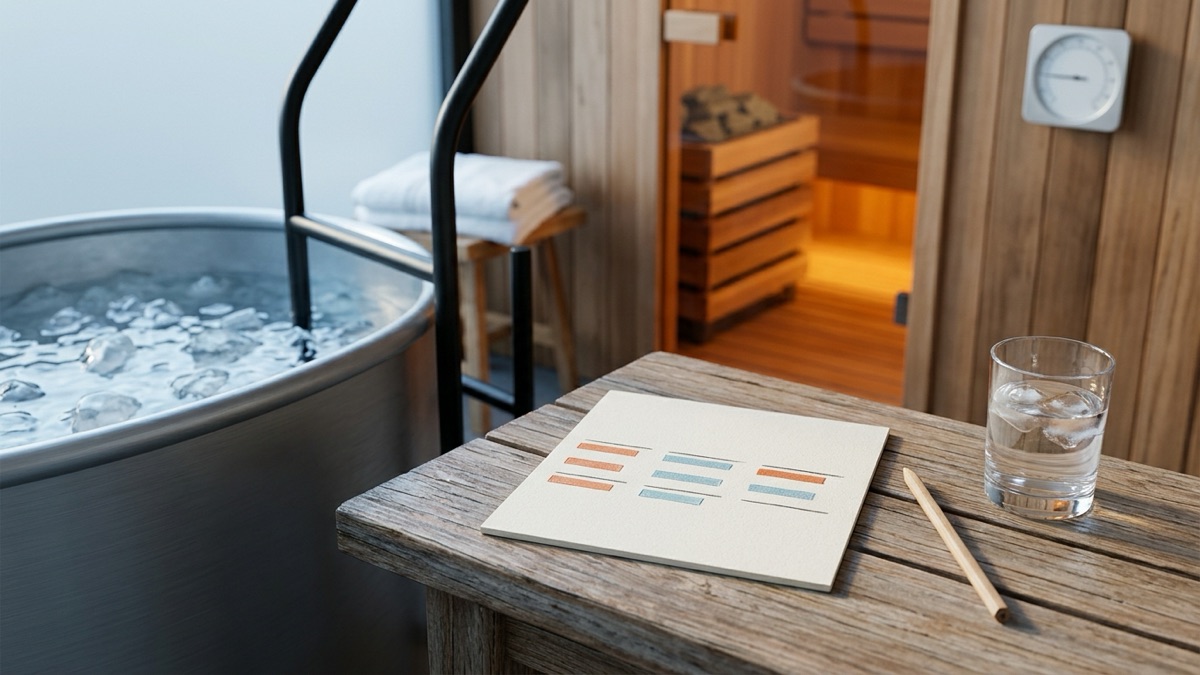
The free contrast therapy builder lays this out for any sauna time, cold time, rounds and order you pick, totals your week against the 57 and 11 minute reference, adds the rest and rehydration line, and prints as one page.
Rest and rehydration: the line everyone skips
You sweat in the sauna and you do not notice thirst in cold water, so a contrast session dehydrates you twice while feeling like it dehydrated you once. The Finnish Sauna Society notes that urine output drops during sauna use because water is lost through sweating, and Hussain and Cohen point out that the research itself was inconsistent about rehydration, which is a polite way of saying nobody measured it well. The practical rule is simple: a glass of water before the first round, one between every round, and more afterwards than you think you need. Alcohol is involved in about half of sauna deaths in Finnish data, so none of it before or during.
Rest between rounds is where the heart rate settles and the blood pressure swing flattens. Two to five minutes of standing, walking or sitting in cool air is enough. The sauna hydration guide covers signs you are behind on fluids.
Does contrast therapy actually help recovery?
Some, and less than the enthusiasm suggests. The relevant evidence is for contrast water therapy, alternating hot and cold water rather than sauna and cold. A 2013 meta-analysis in PLoS One by Bieuzen, Bleakley and Costello pooled 18 trials with 356 healthy participants, where cold water ran 8 to 15 C and hot water 35.5 to 45 C, usually one minute cold and one to three minutes hot. Compared with passive rest, contrast therapy left people less sore at every time point measured, but compared with cold water immersion alone, warm water, compression or stretching there was "little difference in recovery outcome", and the authors note that all the trials had a high risk of bias.
So: contrast therapy beats doing nothing for soreness, it probably does not beat a simple cold plunge, and a sauna at 90 C is a very different heat dose from a 40 C hot tub. The contrast therapy benefits guide goes through the numbers. The honest reason to do sauna and cold together is that it feels good, it is a habit you will keep, and heat and cold each have their own evidence.
The PlungeLog app, coming to Android first, will time each round, log the temperatures, and fill two rings through the week, one for heat and one for cold.
The takeaway
Warm first, cool down for a minute, then cold, and end there unless rewarming is hard for you. Two or three rounds, two to four times a week, adding up to somewhere near 57 minutes of heat and 11 minutes of cold. Water before, between and after. Never alone, never after alcohol, and never a breath-hold in the tub. The order is a preference; the rules are not.
PlungeLog guides are general information built on the published research and safety guidance listed below. They are not medical advice and do not diagnose or treat anything. Cold water and heat stress the heart and can cause cold shock, hypothermia, fainting and dehydration. Never plunge alone or after alcohol, and talk to your doctor before you start if you have a heart condition, high blood pressure, are pregnant, or have Raynaud's or poor circulation.
Questions people ask
Should I do the sauna or the cold plunge first?
Most routines warm up first and end on cold, the pattern the winter swimmers in the Soberg study followed by alternating sea dips with sauna. Ending on heat is gentler if you struggle to rewarm, and better in the evening. Either way, cool down for a minute or two and drink water between.
How long should I wait between the sauna and the cold plunge?
A minute or two of standing or walking in cool air, with a glass of water. The Finnish Sauna Society warns that cold water straight after a sauna makes blood pressure rise quickly, so let your heart rate settle before you get in.
How many rounds of sauna and cold plunge should I do?
Two or three rounds is where most routines stop. Each switch is a swing in heart rate and blood pressure, and one round is a complete session on a busy day.
Where do the 57 and 11 minute weekly numbers come from?
From the participant table of the 2021 Soberg study, where 8 young winter-swimming men averaged about 57 minutes of sauna and 11 minutes of cold water a week across 2 to 3 visits. They are a reference from a small study, not a prescription.
Is contrast therapy proven to help recovery?
A 2013 meta-analysis of 18 contrast water therapy trials found less soreness than passive rest at every time point, but little difference from other recovery methods, and all the trials had a high risk of bias. Plausible and pleasant, not proven.
Where these facts come from
- Soberg et al. 2021, Cell Reports Medicine: winter-swimming men: pmc.ncbi.nlm.nih.gov/articles/PMC8561167/
- Finnish Sauna Society: sauna and health effects: sauna.fi/en/sauna-knowledge/sauna-and-health-effects/
- Bieuzen, Bleakley and Costello 2013, PLoS One: contrast water therapy and exercise induced muscle damage: pmc.ncbi.nlm.nih.gov/articles/PMC3633882/
- Hussain and Cohen 2018: clinical effects of regular dry sauna bathing, a systematic review: pmc.ncbi.nlm.nih.gov/articles/PMC5941775/
- Cleveland Clinic: Are 'cold plunge' ice baths good for you?: health.clevelandclinic.org/what-to-know-about-cold-plunges
- Huberman Lab newsletter: the science and use of cold exposure (a popular protocol): www.hubermanlab.com/newsletter/the-science-and-use-of-cold-exposure-for-health-a
- Roberts et al. 2015, Journal of Physiology: post-exercise cold water immersion and strength training adaptations: pmc.ncbi.nlm.nih.gov/articles/PMC4594298/